Walking into a room full of crystals for the first time is genuinely overwhelming. There are hundreds of stones, dozens of shapes, and a lot of confident advice. This is the short, practical version we give people who are just starting out.
How to choose your first crystals
There are two honest approaches, and neither is wrong.
Choose by attraction. Walk along the shelf and pick up whatever you keep coming back to. Most people are drawn to particular colours and finishes, and a stone you actually like is a stone you will actually use.
Choose by intention. If you are drawn to crystals for a particular reason, calm, focus, sleep, start with the stones traditionally associated with it. Our tumbled stones are the easiest and least expensive place to begin.
A note on honesty: crystals are not medicine. They are traditionally associated with certain qualities, and many people find them a useful focus for intention and a calming object to hold. Treat them as that, not as a substitute for care you need.
Five good stones to start with
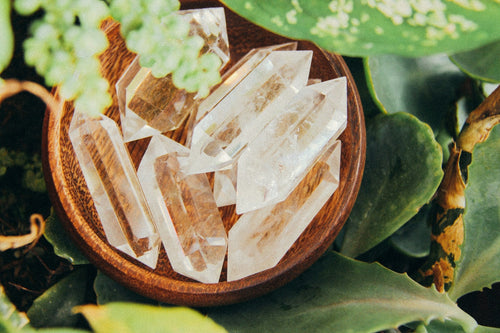
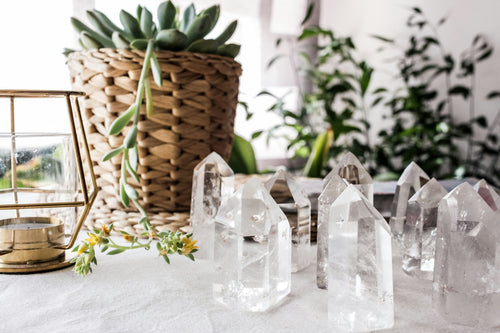
- Clear quartz, the all-rounder, traditionally associated with clarity.
- Rose quartz, soft pink, associated with compassion and self-worth.
- Amethyst, purple, associated with calm and restful sleep. A favourite for bedsides.
- Black tourmaline or obsidian, dark and grounding, often kept by a door or desk.
- Citrine, warm and golden, associated with energy and abundance.
Start with two or three rather than ten. You will use them more.
How to cleanse a crystal
Cleansing is simply a reset, a small ritual that marks a stone as yours and clears what it has picked up. Choose the method that suits the stone:
- Smoke: pass it through the smoke of a sage or palo santo bundle. Safe for every stone.
- Moonlight: leave it on a windowsill overnight. Safe for every stone, and the easiest to remember.
- Sound: a singing bowl or bell. Good for cleansing several at once.
- Water: a brief rinse under running water, but only for hard, non-porous stones like quartz.
Do not put these in water
Selenite dissolves. Malachite, pyrite, halite and many soft or metallic stones will pit, rust or break down. If you are unsure, do not risk it, use smoke or moonlight instead.
Caring for them properly
The care instruction people are rarely given: sunlight fades crystals. Amethyst, rose quartz, citrine and fluorite all lose colour in a sunny window over months. Cleanse in moonlight rather than sun, and keep coloured stones out of direct afternoon light.
Beyond that, it is simple. Dust with a soft dry cloth. Store points and clusters where they cannot knock together, as edges chip more easily than they look. If you wear crystal jewellery, take it off before showering, swimming or applying perfume.
Where to keep them
Somewhere you will actually see them. A stone in a drawer does nothing. People commonly keep amethyst by the bed, something grounding near the front door, and a piece they like on a desk. If you want to be more deliberate, a crystal grid gives a set of stones a fixed home and a clear purpose.
When you are ready to move past tumbles, raw clusters and carved shapes are the natural next step. Or come and handle them in person at Mortdale, with crystals, that is genuinely the best way to choose.